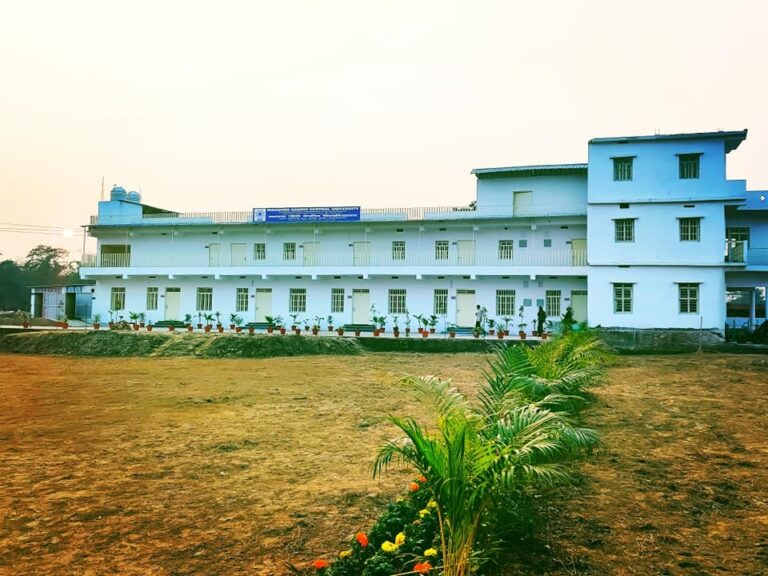
NCERT RIE B.Ed Admission 2026 – CEE exam pattern, seat matrix, selection criteria, and preparation strategy
NCERT RIE B.Ed Admission 2026
Complete guide to Regional Institutes of Education B.Ed admission process, CEE exam pattern, seat matrix, selection criteria, and preparation strategy
📑 Table of Contents
Introduction to NCERT RIE B.Ed Admission 2026
The Regional Institutes of Education (RIEs) are premier teacher education institutions in India, run by the National Council of Educational Research and Training (NCERT). These institutes offer a prestigious 2-year Bachelor of Education (B.Ed) program that is highly valued in both government and private school sectors.
This comprehensive guide covers everything you need to know about NCERT RIE B.Ed admission for 2026, including the Common Entrance Examination (CEE), selection criteria, seat distribution, and state-wise allocation.
What are Regional Institutes of Education (RIE)?
🏛️ About the Institution
Governing Body: National Council of Educational Research and Training (NCERT)
Total Institutes: 5 Regional Institutes across India
Established: To provide quality teacher education and serve as model institutions
Recognition: Degrees recognized by NCTE (National Council for Teacher Education)
💎 Value & Prestige
Academic Excellence: Rigorous curriculum designed by NCERT experts
Employment: High acceptance in private and government school interviews
Campus Life: Excellent infrastructure with students from across India
National Exposure: Opportunity to interact with diverse teaching methodologies
The Five Regional Institutes
- RIE Ajmer (Rajasthan) – Covering North India
- RIE Bhopal (Madhya Pradesh) – Covering Central & Western India
- RIE Bhubaneswar (Odisha) – Covering Eastern India
- RIE Mysore (Karnataka) – Covering South India
- NERIE Shillong (Meghalaya) – Covering North-East India
RIE B.Ed Admission Timeline 2026 (Tentative)
Application Forms Released
Online registration begins
CEE Entrance Exam
Common Entrance Examination conducted
Results Declaration
Rank cards issued
Counseling Process
Seat allocation & admission
Key Milestones to Remember
- Application Window: Typically open for 3-4 weeks in April
- Last Date to Apply: Usually end of April or early May
- Admit Card Release: 1-2 weeks before the exam
- Exam Day: Usually conducted in June across multiple centers
- Result Announcement: Within 4-6 weeks of exam
🎓 Prepare Better with Our Resources
Access comprehensive study materials and tools to boost your RIE B.Ed preparation
Selection Process: The 60:40 Weightage Rule
⚡ Critical Information
Unlike most entrance exams, RIE B.Ed admission is NOT based solely on entrance exam marks. Your final merit rank is calculated using a combined weightage system.
📊 Merit Calculation Formula
Final Merit = (CEE Score × 60%) + (Graduation Marks × 40%)
What this means:
- 60% weightage given to your RIE CEE entrance exam performance
- 40% weightage given to your graduation or post-graduation marks
- Both components are equally important for final selection
💡 Strategic Implication
For students with high graduation marks: You have a significant advantage even if you score moderately in the entrance exam.
For students with average graduation marks: You need to excel in the CEE to compensate.
Example: A candidate with 90% graduation marks needs to score only decently in CEE, while a 60% graduate must aim for top scores in CEE.
How Marks are Normalized
Since different universities have different marking systems, NCERT normalizes graduation/PG marks before calculating the final merit:
- Percentage system marks are taken as-is
- CGPA/GPA is converted to percentage using university-specific conversion formulas
- Division system (First, Second, etc.) is converted to standard percentages
RIE CEE Exam Pattern 2026 (Level 2)
| Component | Details |
|---|---|
| Total Questions | 80 Multiple Choice Questions |
| Total Marks | 160 Marks (2 marks per question) |
| Duration | 2 Hours (120 minutes) |
| Negative Marking | Yes, -0.5 marks per wrong answer |
| Exam Mode | Online Computer-Based Test (CBT) |
| Language | English & Hindi (bilingual) |
Section-wise Distribution
Part 1: Language Proficiency (English)
Questions: 20
Marks: 40
Topics:
- Reading Comprehension
- Grammar & Usage
- Vocabulary
- Sentence Formation
Part 2: Teaching Aptitude
Questions: 30
Marks: 60
Topics:
- Teaching Methodology
- Educational Psychology
- Classroom Management
- Learning Theories
- Evaluation Techniques
Part 3: Reasoning Ability
Questions: 30
Marks: 60
Topics:
- Logical Reasoning
- Analytical Ability
- Problem Solving
- Data Interpretation
- Pattern Recognition
Seat Matrix & Reservation Policy
🪑 Total Seats Per Institute
110 Seats
Stream-wise Distribution:
Science & Mathematics
Humanities/Social Science
📊 Reservation Policy
Category-wise Reservation (as per Central Government norms):
- SC: 15% of total seats
- ST: 7.5% of total seats
- OBC-NCL: 27% of total seats
- EWS: 10% of total seats
- PwD: 5% horizontal reservation
Stream Eligibility
| B.Ed Stream | Eligible Graduation Subjects |
|---|---|
| Science & Mathematics | B.Sc. with Physics, Chemistry, Mathematics, Biology, or related science subjects |
| Humanities/Social Science | B.A., B.Com with subjects like History, Geography, Political Science, Economics, English, Hindi, etc. |
State Quota System: Which RIE Can You Apply To?
Unlike many national-level exams where you can choose your preferred college, RIE admission follows a strict state-based allocation system. Each RIE is designated to serve specific states and union territories.
How State Quota Works
- Domicile Requirement: You must have a domicile certificate of a state covered by that particular RIE
- No Choice: Your state determines which RIE you can apply to – there’s no option to select a different institute
- Certificate Verification: Domicile certificate must be produced during counseling
- Example: If you’re from Uttar Pradesh, you can only apply to RIE Ajmer. A Karnataka student can only apply to RIE Mysore
Which RIE is for Your State? Complete Allocation List
| RIE Institute | Region | States & UTs Covered |
|---|---|---|
| RIE Ajmer (Rajasthan) |
North India | Uttar Pradesh, Delhi, Haryana, Punjab, Rajasthan, Himachal Pradesh, Jammu & Kashmir, Ladakh, Chandigarh |
| RIE Bhopal (Madhya Pradesh) |
Central & Western India | Madhya Pradesh, Gujarat, Maharashtra, Goa, Chhattisgarh, Dadra & Nagar Haveli, Daman & Diu |
| RIE Bhubaneswar (Odisha) |
Eastern India | Odisha, West Bengal, Bihar, Jharkhand, Andaman & Nicobar Islands |
| RIE Mysore (Karnataka) |
South India | Karnataka, Tamil Nadu, Kerala, Andhra Pradesh, Telangana, Puducherry, Lakshadweep |
| NERIE Shillong (Meghalaya) |
North-East India | Assam, Meghalaya, Manipur, Mizoram, Nagaland, Tripura, Arunachal Pradesh, Sikkim |
🗺️ Quick State Finder
Are you from:
- UP, Delhi, Punjab, Haryana? → Apply to RIE Ajmer
- MP, Maharashtra, Gujarat? → Apply to RIE Bhopal
- West Bengal, Bihar, Odisha? → Apply to RIE Bhubaneswar
- Tamil Nadu, Karnataka, Kerala? → Apply to RIE Mysore
- Assam, Meghalaya, Manipur? → Apply to NERIE Shillong
Eligibility Criteria for RIE B.Ed 2026
🎓 Educational Qualification
Minimum Requirement:
- Bachelor’s degree (in any discipline) from a recognized university
- OR Master’s degree from a recognized university
- Minimum 50% marks in aggregate (45% for SC/ST/OBC/PwD candidates)
Note: Final year students can also apply, subject to fulfilling eligibility before admission
🏡 Domicile Requirement
Must possess a valid domicile certificate of a state/UT covered by the RIE you’re applying to
Domicile Proof:
- Domicile certificate issued by state authorities
- Valid for document verification during counseling
📅 Age Limit
General Category: No specific upper age limit mentioned
Reservation: Age relaxation as per government norms for reserved categories
📋 Stream-Specific Eligibility
For Science & Maths Stream:
- B.Sc. with science subjects (Physics, Chemistry, Maths, Biology, etc.)
- At least one teaching subject from science/maths
For Humanities/Social Science Stream:
- B.A./B.Com with humanities subjects
- At least one teaching subject from humanities/social science
Preparation Strategy for RIE CEE 2026
Subject-wise Preparation Tips
📖 Language Proficiency (English)
Focus Areas:
- Read newspapers daily (The Hindu, Indian Express)
- Practice comprehension passages (10-15 daily)
- Build vocabulary using word lists
- Grammar: Tenses, voice, narration, prepositions
Resources:
- Wren & Martin for grammar
- Previous year RIE papers
- CTET/TET English sections
👨🏫 Teaching Aptitude
Key Topics:
- Teaching Methods & Techniques
- Educational Psychology
- Learning Theories (Piaget, Vygotsky, Bruner)
- Classroom Management
- Evaluation & Assessment
- NCF 2005 & NEP 2020
Study Strategy:
- NCERT Education textbooks (B.Ed level)
- Previous RIE CEE questions
- UGC NET Education papers
🧠 Reasoning Ability
Important Topics:
- Syllogisms & Logical Deduction
- Analogies & Classifications
- Number Series & Letter Series
- Coding-Decoding
- Blood Relations
- Data Interpretation
Practice Strategy:
- Solve 30-40 questions daily
- Use R.S. Aggarwal or similar books
- Take timed mock tests
Time Management Strategy
In the 2-hour exam:
- Language Section (20 Q): Allocate 30 minutes
- Teaching Aptitude (30 Q): Allocate 50 minutes
- Reasoning (30 Q): Allocate 40 minutes
Golden Rules:
- Start with your strongest section to build confidence
- Don’t spend more than 1.5 minutes on any question
- Mark difficult questions for review and move on
- Due to negative marking (-0.5), avoid blind guessing
- Save 5-10 minutes at the end for review
Mock Test Strategy
- Take 2-3 full-length mock tests per week
- Analyze mistakes for 2 hours after each test
- Create error logs for repeated mistakes
- Time yourself strictly to build exam temperament
Don’t Forget: Your Graduation Marks Matter!
Since 40% weightage comes from graduation marks, if you’re still in your final year:
- Focus on scoring well in your final semester exams
- Even a 5% improvement in graduation can make a significant difference in final merit
- Balance your time between exam preparation and graduation exams
📚 Boost Your Preparation with Expert Resources
Access curated study materials, practice tests, and preparation guides
Frequently Asked Questions (FAQ)
Q1: Can I apply to multiple RIE institutes?
Answer: No. You can only apply to the RIE that covers your domicile state. The state quota system restricts you to one specific RIE based on where you have domicile.
Q2: What if I’m studying in a different state than my domicile?
Answer: Your eligibility is determined by your domicile state, not where you’re currently studying. For example, if you have UP domicile but are studying in Karnataka, you must apply to RIE Ajmer (which covers UP).
Q3: Is there a separate application fee?
Answer: Yes, there is an application fee (amount varies by category). General/OBC candidates typically pay higher fees than SC/ST/PwD candidates. Check the official brochure for exact amounts.
Q4: Can B.Com graduates apply for B.Ed?
Answer: Yes, B.Com graduates can apply for the Humanities/Social Science stream if they have subjects like Economics, Business Studies, or Accountancy that can be teaching subjects at the school level.
Q5: What is the difference between RIE and NERIE?
Answer: NERIE (North Eastern Regional Institute of Education) in Shillong specifically caters to the North-Eastern states. While it follows the same admission process and standards, it focuses on the educational needs and context of North-East India.
Q6: Are RIE B.Ed degrees recognized for government teaching jobs?
Answer: Yes, absolutely. RIE B.Ed degrees are recognized by NCTE (National Council for Teacher Education) and are valid for applying to government teaching positions across India, including TGT, PGT, and state-level teaching exams.
Q7: What happens if I have low graduation marks?
Answer: You need to compensate by scoring very high in the CEE entrance exam. Since the merit calculation is 60:40, excellent CEE performance can help overcome lower graduation marks, though it becomes more challenging.
Q8: Is there any interview or teaching demonstration?
Answer: No. Admission is purely merit-based using the 60:40 formula (CEE marks + Graduation marks). There is no interview, group discussion, or practical teaching demonstration in the selection process.
Q9: What is the hostel facility like?
Answer: All RIE institutes provide hostel facilities for students. Hostel accommodation is usually provided on campus with mess facilities. Fees are nominal compared to private B.Ed colleges.
Q10: Can I do B.Ed from RIE in distance mode?
Answer: No. RIE B.Ed programs are full-time, regular 2-year programs with mandatory attendance. Distance or correspondence B.Ed is not offered by RIEs.
Q11: What subjects can I teach after RIE B.Ed?
Answer: You can teach the subjects you specialized in during your B.Ed (based on your graduation background). For example, if you did B.Sc. with Physics and Mathematics, you can teach these subjects at secondary and senior secondary levels.
Q12: Is coaching necessary for RIE CEE?
Answer: Not necessarily. With proper self-study using NCERT materials, previous year papers, and good reference books for reasoning and teaching aptitude, you can prepare effectively. However, coaching can provide structured guidance and regular mock tests.
Important Official Links
- NCERT Official Website: ncert.nic.in
- RIE Ajmer: Check NCERT website for specific RIE portals
- RIE Bhopal: Check NCERT website for specific RIE portals
- RIE Bhubaneswar: Check NCERT website for specific RIE portals
- RIE Mysore: Check NCERT website for specific RIE portals
- NERIE Shillong: Check NCERT website for specific RIE portals
Note: Always verify information from official NCERT sources before taking any action related to admission.
Conclusion
NCERT RIE B.Ed admission is a golden opportunity for aspiring teachers to receive quality education from India’s premier teacher training institutes. The unique 60:40 selection system rewards both academic excellence and entrance exam performance, making it fairer than purely exam-based admissions.
🎯 Key Takeaways
- Unique Selection: 60% CEE + 40% Graduation marks determine your merit
- State-Based: You can only apply to the RIE covering your domicile state
- Competitive: With only 110 seats per institute, aim for top 10 rank in your category
- Balanced Preparation: Focus on Teaching Aptitude and Reasoning along with English
- National Recognition: RIE B.Ed degrees are highly valued across India
Start your preparation early, focus on all three sections of the CEE, and don’t neglect your graduation exams if you’re in final year. With dedicated effort and smart preparation, you can secure admission to these prestigious institutes.
Best of luck for RIE B.Ed Admission 2026!